

Home › Education and Research › Healthcare & Insurance › FM Red Tag
FM Global Red Tag: Insurer Fire Watch Requirements
The best-known impairment program in the insurance world is a piece of red cardboard. When it hangs on your sprinkler riser, your carrier is running a process, and it may include a fire watch the fire code never asked for.
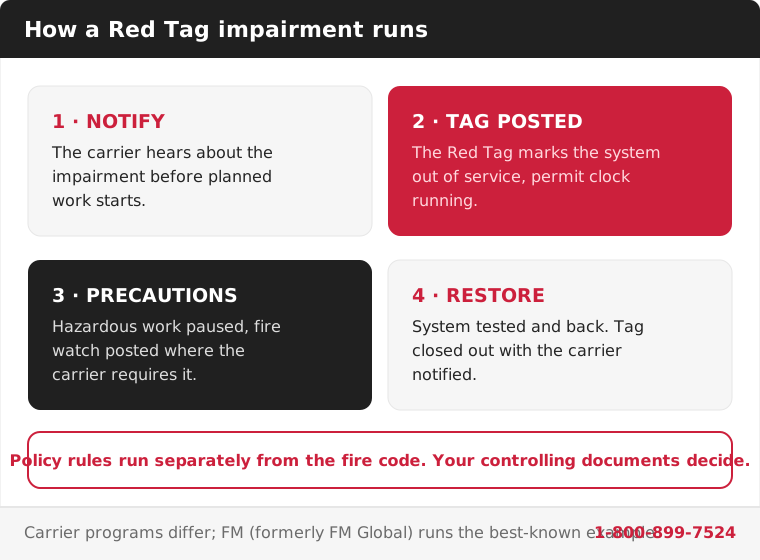
FM Global and other property carriers run impairment permit systems for insured facilities. When fire protection goes out of service, the carrier is notified, a tag marks the system, hazardous work pauses, and precautions the carrier requires, including a fire watch, run until restoration. Depending on your policy, endorsements, and carrier agreements, these can be binding conditions, they run separately from the fire code, and they can be stricter than anything the marshal orders. Your controlling documents decide.
What the Red Tag is
The Red Tag is the visible end of a carrier impairment permit system: notification before planned work, a tag marking the impaired system, precautions during the outage, and a close-out when protection returns. FM, known until 2024 as FM Global, documents its program in its property loss prevention data sheets, and other carriers run equivalents. How binding the program is depends on the policy, its endorsements, and the carrier relationship; treat the controlling documents as the answer.
When the carrier requires a watch
| Condition | Threshold | Source |
|---|---|---|
| Planned impairment for maintenance or construction | Notify before work; precautions per the permit, watch where required | Carrier program |
| Emergency impairment | Immediate notification; watch commonly required until restored | Carrier program |
| High-value or high-hazard occupancies | Carriers commonly apply stricter terms | Carrier program |
| Vacant or idle facilities | Carrier patrols and watch terms can apply with no occupants at all | Policy conditions |
Duties under a carrier program
Property carriers care about the building as much as the people in it. Carrier-driven watches emphasize provable patrols and property protection alongside life safety.
Documented rounds of the unprotected areas
Fire and anything that feeds one: hot work, storage
Fire department, facility, and the carrier contact
Rounds the adjuster can rely on later
The permit record
☐ The impairment permit or tag number
☐ Carrier notification, before planned work
☐ Precautions taken, including watch staffing
☐ Rounds log for the impairment window
☐ Restoration confirmation and tag close-out
Carrier rules vs the fire code
Can bind through the policy and carrier agreements, and can call for a watch the code never mentions.
Binds you through law. The marshal cannot waive the carrier, or the reverse.
Run both notification lists at hour zero and satisfy the stricter requirement.
Red Tag questions
Not as law. Its force comes through the insurance relationship, and depending on the policy, endorsements, and state law, ignoring the program can put coverage at risk. Treat it as seriously as the code.
Many property carriers run a version of impairment management. The tag color changes; the shape of the program rarely does. Ask your agent for the specifics.
At least. The log may end up in front of an adjuster after a loss, which is a harder audience than an inspector.
Carrier requiring a watch tonight?
Firefighter-run fire watch services on site in under 3 hours, nationwide. Call 1-800-899-7524.
Educational summary, not legal or insurance advice. Your surveyor, accreditor, insurer, and fire marshal govern. NFPA® standards are copyrighted publications of the National Fire Protection Association; this page summarizes and cites them, it does not reproduce them. The Fast Fire Watch Company is not affiliated with or endorsed by CMS, The Joint Commission, DNV, FM Global, or the NFPA.